
19 Mar 2026
Conflict in the Gulf – What It Means for Investors
It’s now been three weeks since the US and Israel launched strikes on Iran, and what was expected to be a short, sharp operation has turned into a more prolonged and uncertain conflict.
The initial plan appeared to rely on quickly disrupting Iran’s leadership, with the hope that this might trigger internal instability, provoking a popular uprising against the Iranian Regime. So far, that outcome hasn’t materialised, and the situation remains tense.
Iran has retaliated by striking neighbouring countries including Saudi Arabia and the UAE, targeting energy infrastructure and in effect closing the Straits of Hormuz to all commercial traffic, effectively shutting down 20% of the world’s oil supply.
How are markets reacting?
So far, with the exception of a sharp rise in the price of oil, market reactions have been relatively measured.
Some regions, particularly in Asia such as Japan, have felt a greater impact due to their reliance on energy imports through the Straits of Hormuz. More broadly, higher oil prices tend to have two main effects: they can slow economic growth and push inflation higher.
Markets have started to reflect these risks, with bond yields edging up and equity markets coming under some pressure. However, investors are sensing a desire on both sides to find a solution and some stability is gradually returning to markets.
There is also some reassurance in the background. If conditions were to worsen, central banks could step in to support markets, although they would need to balance this carefully given ongoing inflation concerns.
What should investors do?
At times like this, its important not to lose sight of our medium to long-term investment principles.
While geopolitical events can create short-term uncertainty, trying to predict market movements or time entry and exit points is extremely difficult—and often counterproductive.
History shows that staying invested and maintaining a well-diversified portfolio tends to deliver better outcomes over time. The chart below illustrates the growth of the MSCI World Index over the past 20 years encompassing some of the major events markets have coped with in that time.
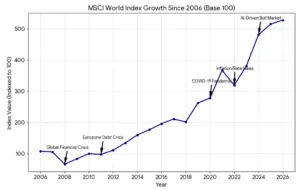
Diversification of risk is a key philosophy of both btam and Morningstar, and portfolios and the funds within them are actively monitored to ensure risk levels remain appropriate.
In the current environment, the focus remains on delivering our long term investment outcomes for our clients.





 Production